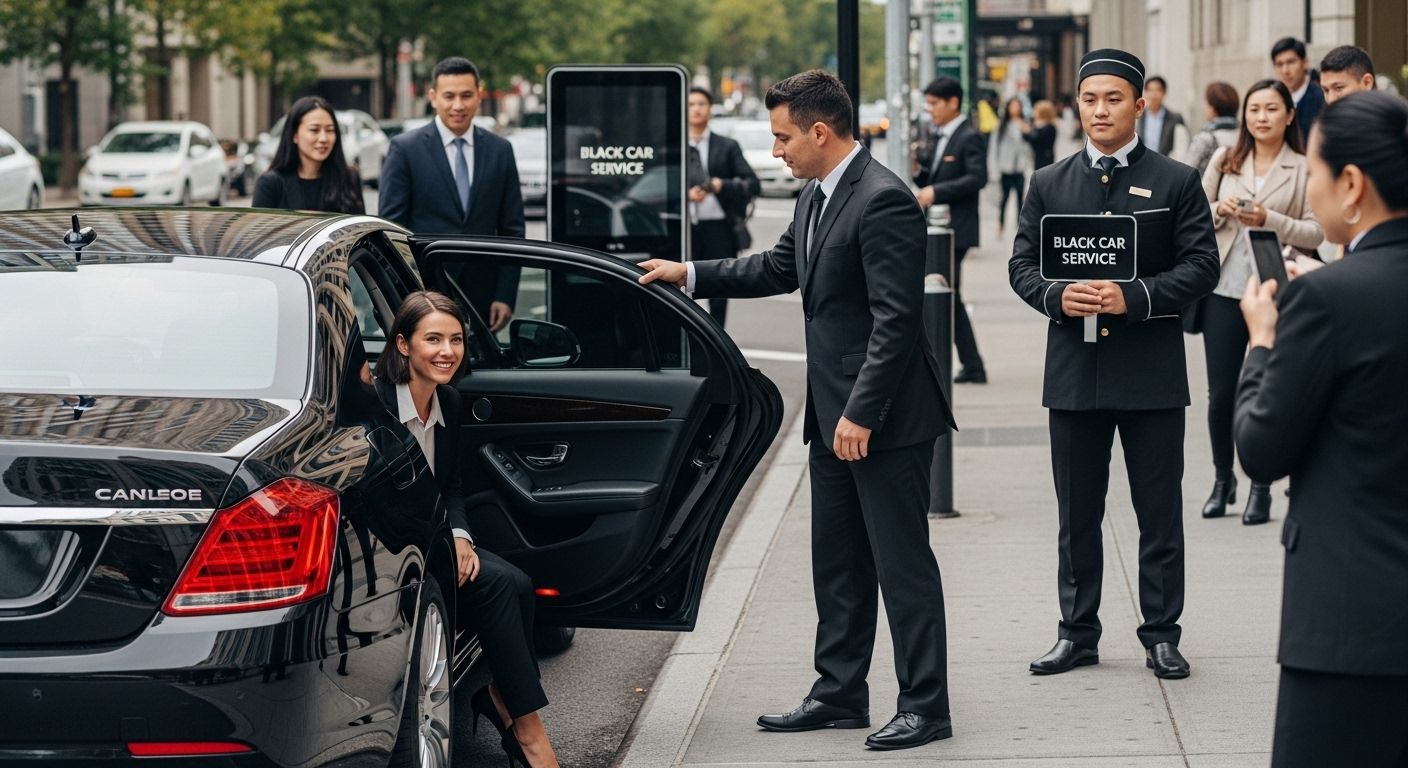
Why Starting a Luxury Car Service is a Smart Business Move
How to start a luxury car service has become one of the most searched business queries as entrepreneurs recognize the massive opportunity in premium transportation. The global ride-sharing market is projected to reach $226 billion by 2028, with luxury car services experiencing even faster growth due to increasing disposable incomes and demand for premium experiences.
Quick Answer: 5 Steps to Start a Luxury Car Service
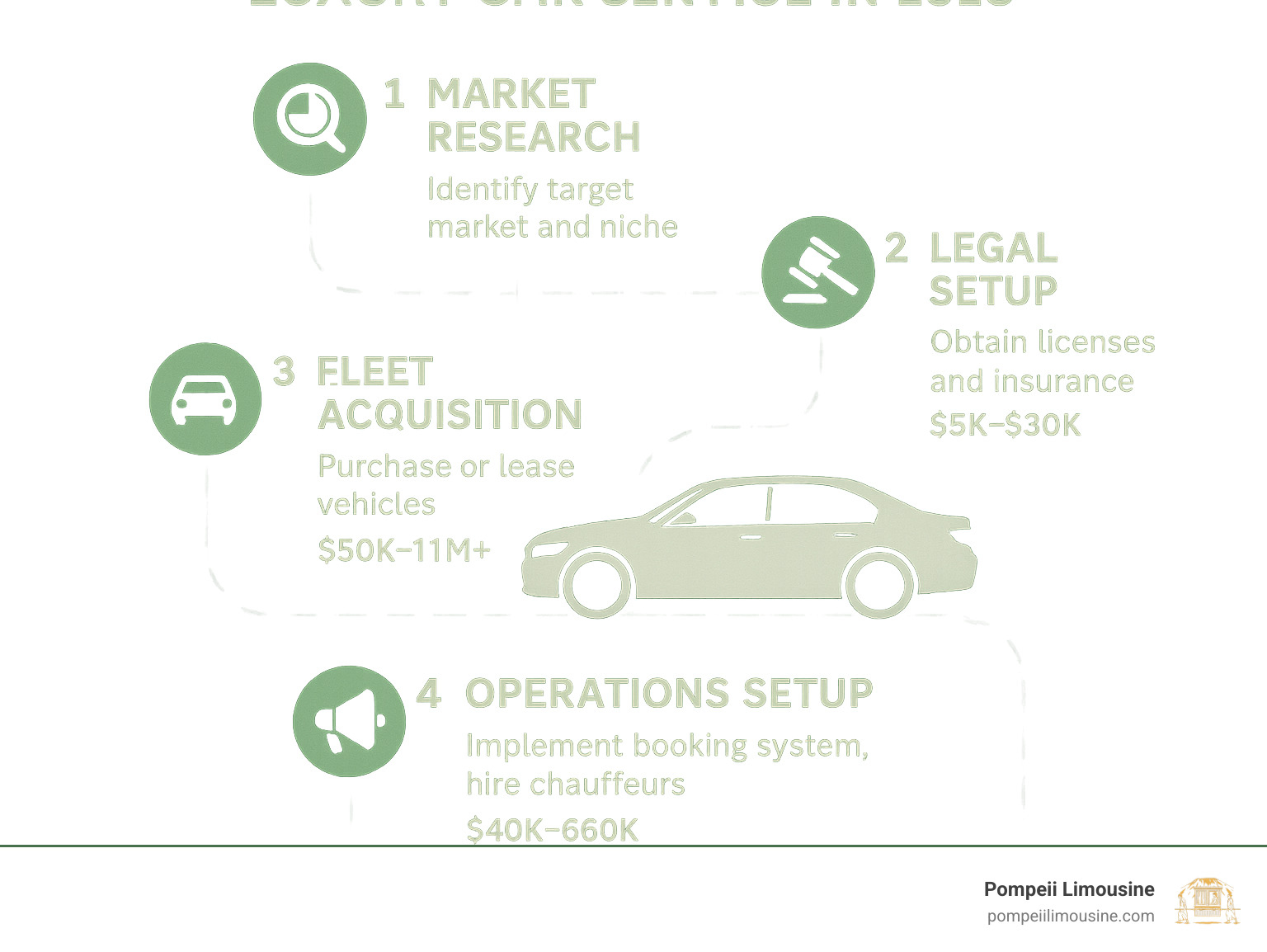
- Market Research & Niche Selection – Identify your target market (corporate travelers, weddings, airport VIPs)
- Legal Setup & Licensing – Form LLC, obtain DOT permits, secure commercial insurance ($5,000-$30,000 annually)
- Fleet Acquisition – Budget $50,000-$1M+ depending on scale; consider leasing vs. buying
- Technology & Operations – Implement booking software, hire professional chauffeurs ($40,000-$60,000 salary)
- Marketing & Partnerships – Build brand, secure hotel/corporate contracts, focus on customer experience
Starting a luxury car service requires significant upfront investment but offers strong profit potential with margins of 20-40% when properly executed. The key differentiators from standard ride-hailing include premium vehicles, professional chauffeurs, personalized service, and exclusive amenities that affluent clients are willing to pay for.
Industry statistics show that up to 60% of luxury transportation startups favor leasing vehicles to preserve capital and maintain fleet flexibility. Well-executed networking strategies can improve customer acquisition by up to 35%, while businesses investing in continuous chauffeur training see up to 20% increases in repeat clientele.
I’m Paul Morales, and through my experience operating Pompeii Limousine – San Diego’s premier luxury transportation service – I’ve learned how to start a luxury car service that delivers world-class experiences. Having built relationships with corporate clients, hotels, and event planners across Southern California, I’ll share the exact strategies that have made our service successful in this competitive market.
Step 1: Size the Market & Carve Out Your Niche
Before diving into how to start a luxury car service, you need to understand the market landscape. The luxury ride-hailing market is experiencing significant expansion, driven by increasing disposable incomes and demand for premium transportation services. According to latest market numbers, the global ride-sharing market continues to grow at an impressive rate, with luxury segments outpacing standard services.
We’ve observed that affluent customers demand comfort, exclusivity, and convenience – three pillars that differentiate luxury services from standard ride-hailing. When conducting your market research, focus on identifying gaps in your local market where established competitors may be underserving specific customer segments.
Start by conducting a comprehensive SWOT analysis of your local market. Examine existing competitors, their pricing models, service offerings, and customer reviews. Look for patterns in complaints or unmet needs that your service could address. In our experience serving the San Diego market, we found opportunities in providing more personalized service and maintaining newer vehicle fleets than many competitors.
What Makes a Service “Luxury” vs. Standard?
The distinction between luxury and standard car services goes far beyond just having nicer vehicles. True luxury service encompasses every touchpoint of the customer experience. Premium black car services typically feature:
- Fleet Quality: Late-model luxury vehicles (Mercedes, BMW, Audi, Tesla) maintained to showroom standards
- Professional Chauffeurs: Extensively trained drivers who understand service etiquette and local geography
- Exclusive Amenities: Complimentary water, WiFi, phone chargers, newspapers, and sometimes refreshments
- Personalized Service: Meet & greet options, flight tracking, flexible scheduling, and concierge-level attention
- Reliability: Punctuality guarantees, often arriving 15 minutes early, with backup vehicles available
As detailed in our chauffeur history guide, the evolution of luxury transportation has always centered on providing an liftd experience that justifies premium pricing.
Target Audience & Niche Selection
Successful luxury car services typically focus on specific market segments rather than trying to serve everyone. Based on our experience and industry data, the most lucrative niches include:
Corporate Travelers: Business executives who value time efficiency and professional image. These clients often have company accounts and generate recurring revenue. Industry statistics show that 73% of business executives prefer premium transportation services.
Wedding & Event Transportation: High-margin bookings for special occasions where clients prioritize reliability and luxury experience. Wedding transportation often includes multiple vehicles and longer rental periods.
Airport VIP Services: Affluent travelers seeking stress-free airport transfers with flight tracking, meet & greet services, and luxury amenities. This segment appreciates punctuality and professional service.
Hotel Partnerships: Collaborating with luxury hotels to provide guest transportation creates steady referral streams. Hotels prefer working with reliable, professional services that reflect their brand standards.
Drafting a Data-Driven Business Plan
Your business plan should clearly define your mission, vision, and unique value proposition. Include detailed financial projections covering:
- Revenue Streams: Hourly rates, corporate contracts, event packages, airport transfers, and subscription models
- Pricing Model: Research shows dynamic pricing can increase revenue during peak demand periods
- Break-even Analysis: Calculate how many rides per month you need to cover fixed costs
- Growth Projections: Plan for fleet expansion and market penetration over 3-5 years
Target profit margins of 20-40% are realistic for well-managed luxury car services. Factor in all costs including vehicle payments, insurance, fuel, maintenance, chauffeur salaries, and marketing expenses.
Step 2: Legal Setup, Licensing & Insurance
The regulatory landscape for luxury car services is complex and varies significantly by location. Proper legal setup is crucial for protecting your business and ensuring compliance with local, state, and federal regulations.
Business Structure & Regulatory Checklist
Start by forming a Limited Liability Company (LLC) to protect your personal assets and provide operational flexibility. Most luxury car service operators choose LLC structure for its liability protection and tax benefits. You’ll need to:
- Register your business with your state and obtain an Employer Identification Number (EIN)
- Research local ordinances as each city may have specific requirements for transportation services
- Obtain DOT permits and transportation authority licenses
- Secure airport badges if you plan to provide airport services – this process can take 2-3 months
- Ensure chauffeur licensing requirements are met, including Commercial Driver’s License (CDL) where required
Industry data shows that 94% of successful luxury transportation operators maintain strict compliance with regional regulations. Don’t underestimate the time and cost involved in obtaining proper licensing – budget at least 2-3 months for the complete process.
Insurance Essentials & Safety Protocols
Comprehensive insurance coverage is non-negotiable in the luxury car service industry. Commercial auto and liability insurance can range from $5,000 to $30,000 per year, representing about 7-10% of your overall startup costs. Essential coverage includes:
- Commercial Auto Insurance: Covers your fleet vehicles and drivers
- General Liability Insurance: Protects against third-party claims
- Uninsured/Underinsured Motorist Coverage: Additional protection for passenger safety
Work with an insurance professional who specializes in commercial transportation to ensure adequate coverage limits. Many luxury car services also implement additional safety protocols including:
- Regular vehicle inspections and maintenance schedules
- Driver background checks and ongoing monitoring
- GPS tracking and real-time fleet monitoring
- Comprehensive sanitization procedures (especially important post-pandemic)
For detailed information about commercial liability basics, consult resources like Investopedia’s commercial general liability guide.
Funding Options & Capital Stack
Starting a luxury car service requires significant capital investment. Based on industry data, funding requirements typically range from:
- Small-scale launch: $50,000-$100,000 for minimal fleet and basic operations
- Mid-range setup: $250,000-$500,000 for moderate fleet and professional systems
- High-end launch: Over $1 million for extensive fleet and premium services
Funding options include:
SBA Loans: Small Business Administration loans often offer favorable terms for transportation businesses. The application process is thorough but can provide substantial capital at competitive rates.
Equipment Financing: Many lenders specialize in vehicle financing for commercial fleets. This option allows you to use the vehicles themselves as collateral.
Angel Investors: High-net-worth individuals who understand the luxury service industry may be interested in investing, especially if you have relevant experience or unique market positioning.
Leasing Credit: Vehicle leasing requires less upfront capital and preserves cash flow for operations and marketing.
Crowdfunding: Some entrepreneurs have successfully used crowdfunding platforms to raise initial capital, though this approach requires strong marketing and community engagement.
Step 3: Fleet Acquisition & Cost Planning – How to Start a Luxury Car Service
Fleet selection is perhaps the most critical decision in how to start a luxury car service. Your vehicles are the foundation of your brand and directly impact customer perception and operational costs.

Vehicle Selection Strategy
Choose vehicles that align with your target market and brand positioning. Popular luxury car service vehicles include:
Sedans: Mercedes S-Class, BMW 7-Series, Audi A8, Tesla Model S
SUVs: Cadillac Escalade, Mercedes GLS, BMW X7, Tesla Model X
Specialty Vehicles: Sprinter vans for group transportation, stretch limousines for special events
Consider electric vehicle options, which are increasingly popular with environmentally conscious clients and can reduce operational costs. Tesla vehicles, in particular, offer impressive technology features that appeal to luxury clientele.
Vehicle customization options might include:
- Premium interior upgrades
- Advanced entertainment systems
- Privacy partitions
- Specialized lighting
- Branded exterior elements
Buy vs. Lease Decision
The buy versus lease decision significantly impacts your cash flow and operational flexibility. Here’s a comparison based on industry data:
| Factor | Buying | Leasing |
|---|---|---|
| Upfront Cost | $50,000-$300,000+ per vehicle | $3,000-$5,000 monthly per vehicle |
| Cash Flow Impact | High initial investment | Predictable monthly payments |
| Flexibility | Limited – stuck with vehicles | High – can upgrade regularly |
| Maintenance | Owner responsibility | Often included in lease |
| Tax Benefits | Depreciation deductions | Monthly payments deductible |
| Long-term Cost | Lower if vehicles maintained well | Higher over time |
Industry statistics reveal that up to 60% of luxury transportation startups favor leasing vehicles, as it preserves capital and offers flexibility. Leasing allows you to maintain a newer fleet and upgrade vehicles regularly, which is important for maintaining luxury brand standards.
Sample Startup Budgets & Metrics
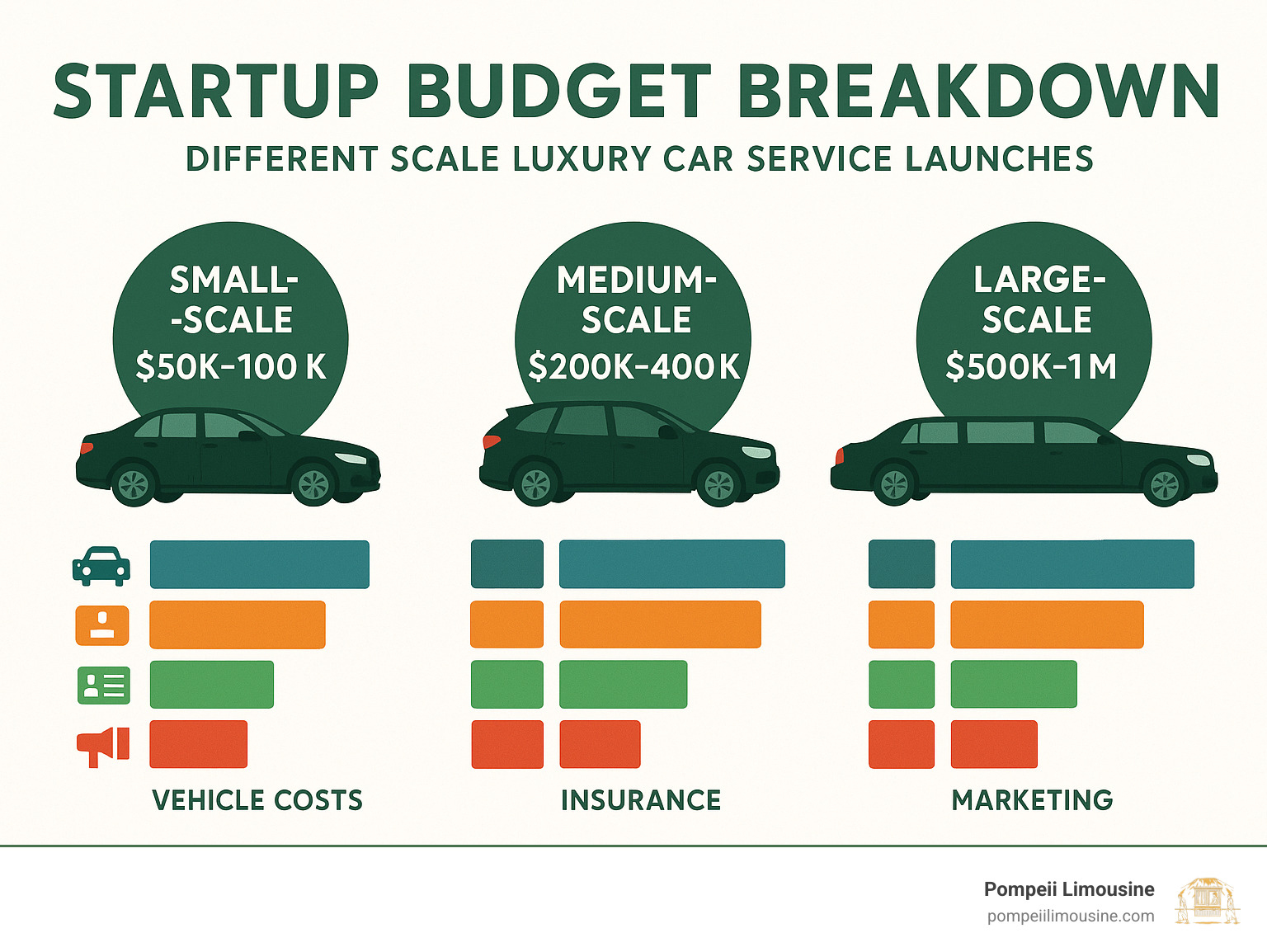
Small-Scale Launch ($50,000-$100,000):
- 2-3 leased vehicles: $6,000-$15,000/month
- Insurance: $10,000-$15,000 annually
- Licensing and permits: $5,000-$10,000
- Marketing: $5,000-$10,000
- Operations setup: $10,000-$20,000
Mid-Range Launch ($250,000-$500,000):
- 5-8 vehicles (mix of owned/leased): $100,000-$200,000
- Insurance: $25,000-$40,000 annually
- Technology platform: $50,000
- Marketing: $30,000-$50,000
- Working capital: $50,000-$100,000
Premium Launch ($1M+):
- 10+ vehicle fleet: $500,000-$800,000
- Custom technology development: $100,000-$200,000
- Premium facility: $50,000-$100,000
- Comprehensive marketing: $100,000+
- Working capital: $200,000+
Key performance indicators to track include:
- Revenue per vehicle per month
- Utilization rates (target 60-70%)
- Customer acquisition cost
- Average trip value
- Repeat customer percentage
Our Fleet Inspiration
At Pompeii Limousine, we’ve learned that fleet quality directly correlates with customer satisfaction and pricing power. Our approach focuses on maintaining vehicles in pristine condition with regular detailing and preventive maintenance schedules. For more details about our fleet philosophy, visit our fleet information page.
We recommend starting with a smaller, high-quality fleet rather than a larger fleet of older vehicles. It’s better to have 3-5 immaculate vehicles than 10 vehicles in average condition. This approach allows you to:
- Maintain consistent quality standards
- Reduce maintenance costs and downtime
- Build a strong reputation for reliability
- Charge premium rates that justify the investment
Step 4: Technology, Operations & Chauffeur Excellence
Modern luxury car services depend heavily on technology to deliver seamless customer experiences and efficient operations. The right technology stack can differentiate your service and improve operational efficiency by up to 30%.

Must-Have Platforms & Integrations
A robust technology platform for a luxury car service typically costs around $50,000 for initial setup, but this investment pays dividends in operational efficiency and customer satisfaction. Essential technology components include:
Booking and Dispatch Software: Centralized system for managing reservations, dispatching drivers, and tracking trips in real-time. Look for platforms that offer:
- Mobile-friendly booking interface
- Automated confirmation and reminder systems
- Real-time GPS tracking
- Flight tracking integration for airport services
- Customer communication tools
Fleet Management System: Monitor vehicle performance, maintenance schedules, and driver behavior. Advanced systems provide:
- Telematics data for fuel optimization
- Predictive maintenance alerts
- Route optimization
- Driver performance analytics
Payment Processing: Secure, PCI-compliant payment systems that accept multiple payment methods including corporate accounts, credit cards, and digital wallets.
Customer Relationship Management (CRM): Track customer preferences, trip history, and communication to deliver personalized service.
Analytics Dashboard: Monitor key performance indicators, revenue trends, and operational metrics to make data-driven decisions.
Cybersecurity is crucial when handling customer data and payment information. Invest in proper security measures including data encryption, secure hosting, and regular security audits.
For more insights on technology’s role in luxury transportation, read our article on technology in the chauffeur service industry.
Recruiting, Training & Retaining Professional Chauffeurs – how to start a luxury car service
Your chauffeurs are the face of your business and directly impact customer satisfaction. The average salary for chauffeurs ranges from $40,000-$60,000 per year, but investing in quality drivers pays dividends in customer loyalty and referrals.
Recruitment Strategy:
- Partner with professional driving schools and hospitality training programs
- Seek candidates with hospitality or customer service backgrounds
- Require clean driving records and professional references
- Conduct thorough background checks and drug screening
Training Program Essentials:
- Defensive driving and safety protocols
- Customer service excellence and etiquette
- Local geography and traffic patterns
- Vehicle operation and maintenance basics
- Emergency procedures and communication protocols
- Cultural sensitivity and discretion
Performance Standards:
- Punctuality (arrive 15 minutes early to every pickup)
- Professional appearance and demeanor
- Vehicle cleanliness and maintenance
- Customer feedback scores
- Safety record and compliance
Retention Strategies:
- Competitive compensation and benefits
- Performance bonuses and incentives
- Ongoing training and development opportunities
- Recognition programs for exceptional service
- Clear advancement pathways
Businesses that invest in continuous chauffeur training see up to 20% increases in repeat clientele. For detailed guidance on selecting quality chauffeurs, refer to our chauffeur selection guide.
Controlling Day-to-Day Operations & Costs
Efficient operations management is crucial for maintaining profitability in the luxury car service industry. Focus on these key areas:
Fuel Optimization: Use telematics and route optimization software to reduce fuel consumption. Energy-efficient vehicle choices and operational practices can reduce fuel costs by up to 20%.
Preventive Maintenance: Implement scheduled maintenance programs to prevent costly breakdowns and extend vehicle life. Track maintenance costs and schedule service during low-demand periods.
Shift Scheduling: Optimize driver schedules based on demand patterns. Use data analytics to predict busy periods and ensure adequate coverage without overstaffing.
Quality Control: Implement regular vehicle inspections, customer feedback systems, and performance monitoring to maintain service standards.
Cost Management: Monitor key metrics including:
- Cost per mile driven
- Revenue per vehicle per day
- Fuel efficiency by vehicle and driver
- Maintenance costs by vehicle age and mileage
- Customer acquisition costs
Step 5: Branding, Partnerships & Customer Experience
The final step in how to start a luxury car service involves building a strong brand presence and creating strategic partnerships that drive sustainable growth. Marketing expenses typically account for 10-15% of your total startup budget, with initial campaigns often ranging from $30,000 to $50,000.

High-End Marketing Playbook
Luxury car service marketing requires a sophisticated approach that reflects your premium positioning. Your marketing strategy should emphasize exclusivity, reliability, and exceptional service rather than competing on price.
Brand Development:
- Create a sophisticated logo and visual identity
- Develop a professional website with online booking capability
- Invest in high-quality photography showcasing your fleet and service
- Establish consistent messaging across all touchpoints
Digital Marketing Strategies:
- Search Engine Optimization (SEO) to capture local luxury transportation searches
- Pay-per-click advertising targeting high-value keywords
- Social media presence on LinkedIn and Instagram to reach affluent demographics
- Email marketing campaigns for customer retention and referrals
Public Relations and Content Marketing:
- Partner with local lifestyle publications and luxury magazines
- Sponsor high-end events and charity galas
- Create valuable content about luxury travel and transportation trends
- Develop relationships with local influencers and business leaders
Geo-Targeted Advertising: Focus marketing efforts on affluent neighborhoods, business districts, and luxury hotels where your target customers live and work.
Forming Strategic Alliances & Subscription Models
Strategic partnerships can significantly accelerate your customer acquisition and provide steady revenue streams. Well-executed networking strategies can improve customer acquisition by up to 35% for luxury car services.
Hotel Partnerships: Luxury hotels are ideal partners because they regularly need reliable transportation for their guests. Develop relationships with:
- Concierge managers at 4-5 star hotels
- Event coordinators at luxury venues
- Wedding planners and event management companies
- Corporate travel managers
Corporate Contracts: Business accounts provide steady, recurring revenue. Target:
- Law firms and financial services companies
- Technology companies and consulting firms
- Medical practices and healthcare organizations
- Real estate agencies handling luxury properties
Subscription and Retainer Models: Offer monthly or annual packages for regular clients, including:
- Corporate accounts with pre-negotiated rates
- Airport transfer packages for frequent travelers
- Event transportation retainers for wedding planners
- Subscription services for affluent individuals
Surge Pricing Strategies: Implement dynamic pricing during peak demand periods like holidays, major events, and severe weather.
Delivering “Wow” Moments & Lifetime Loyalty
Exceptional customer service is what separates luxury car services from standard transportation. Focus on creating memorable experiences that generate word-of-mouth referrals and repeat business.
White-Glove Service Standards:
- Arrive 15 minutes early to every pickup
- Maintain immaculate vehicle cleanliness
- Provide complimentary amenities (water, WiFi, phone chargers)
- Offer personalized touches based on customer preferences
- Handle luggage and open doors as standard practice
Surprise and Delight Elements:
- Remember customer preferences and special occasions
- Provide unexpected amenities like favorite beverages or newspapers
- Offer route suggestions and local insights
- Follow up after service to ensure satisfaction
Feedback and Continuous Improvement:
- Implement real-time feedback systems
- Monitor online reviews and respond professionally
- Use customer input to refine service offerings
- Track customer satisfaction scores and loyalty metrics
Loyalty Program Benefits:
- Priority booking for repeat customers
- Referral bonuses and rewards
- Exclusive access to new services or vehicles
- Personalized service based on trip history
Frequently Asked Questions about How to Start a Luxury Car Service
What are the minimum startup costs?
Based on industry data, the minimum startup costs for a luxury car service range from $50,000 to $100,000 for a small-scale launch. This includes:
- Vehicle leasing deposits and first payments: $10,000-$20,000
- Insurance: $5,000-$15,000 annually
- Licensing and permits: $5,000-$10,000
- Technology platform: $10,000-$25,000
- Marketing and branding: $10,000-$20,000
- Working capital: $10,000-$25,000
Many successful operators start with 2-3 leased vehicles to minimize initial investment while testing market demand.
Should I buy or lease my first vehicles?
For most startups, leasing is the better option. Industry statistics show that up to 60% of luxury transportation startups favor leasing because it:
- Preserves capital for operations and marketing
- Provides flexibility to upgrade vehicles regularly
- Often includes maintenance and warranty coverage
- Offers predictable monthly expenses
- Allows you to maintain a newer fleet
However, if you have substantial capital and plan to operate vehicles for many years, purchasing may be more cost-effective long-term.
How do I secure corporate contracts quickly?
Corporate contracts are the foundation of sustainable luxury car service revenue. To secure them quickly:
- Target the right companies: Focus on law firms, financial services, consulting firms, and technology companies that value professional image
- Develop compelling proposals: Highlight reliability, professional service, and cost predictability
- Offer trial periods: Provide discounted rates for initial bookings to demonstrate service quality
- Leverage existing relationships: Use personal and professional networks to gain introductions
- Provide references: Share testimonials from satisfied individual clients
- Be persistent but professional: Follow up regularly without being pushy
Marketing ROI of over 150% is achievable with targeted corporate outreach campaigns.
Conclusion
Starting a successful luxury car service requires careful planning, significant investment, and unwavering commitment to excellence. The five steps we’ve outlined – market research, legal setup, fleet acquisition, operations development, and strategic marketing – provide a comprehensive roadmap for launching your venture.
Key success factors include:
- Maintaining profit margins of 20-40% through premium pricing and efficient operations
- Investing in continuous chauffeur training to ensure exceptional service
- Building strategic partnerships with hotels and corporate clients
- Leveraging technology to streamline operations and improve customer experience
- Focusing on customer experience and loyalty rather than competing on price alone
Regular review of key performance indicators is essential for long-term success. Monitor utilization rates, customer satisfaction scores, repeat business percentages, and revenue per vehicle to ensure your business remains profitable and competitive.
The luxury transportation industry continues to grow, driven by increasing demand for premium experiences and personalized service. Entrepreneurs who follow proven strategies and maintain high service standards can build profitable, sustainable businesses in this exciting market.
At Pompeii Limousine, we’ve built our reputation on delivering world-class chauffeured car services that exceed expectations at every turn. Our success in the San Diego market demonstrates that with proper planning, execution, and commitment to excellence, you can build a thriving luxury car service business.
Ready to start your luxury car service journey? Contact us today for personalized consultation and guidance based on our years of experience in the industry. We’re here to help you steer the challenges and opportunities of building a successful luxury transportation business.