
Executing a successful corporate event requires more than just a great idea; it demands meticulous planning, foresight, and a systematic approach. Whether you're launching a product, celebrating a milestone, or fostering team cohesion, a comprehensive corporate event planning checklist is your most valuable asset. It transforms a complex web of tasks into a manageable, step-by-step process, ensuring no detail is overlooked and every stakeholder is aligned. This guide moves beyond basic to-do lists to offer a strategic blueprint for event excellence.
We will break down the entire lifecycle of an event, from the initial spark of an idea to the final post-event analysis and follow-up. You'll gain access to 10 critical pillars of event management, complete with actionable insights and practical examples to help you deliver an experience that resonates with attendees and achieves core business goals. To truly orchestrate success and bring your event vision to life, it's beneficial to review comprehensive essential corporate event planning tips that complement a structured checklist. Prepare to master the art of corporate event execution.
1. Define Event Objectives and Goals
The foundational step in any successful corporate event planning checklist is defining your event’s core purpose. Before booking venues or sending invitations, you must clearly articulate what you want to achieve. This involves identifying the primary driver for the event, whether it's launching a new product, fostering team collaboration, appreciating clients, or providing professional training. Every subsequent decision, from the guest list to the catering, will flow from these initial objectives.
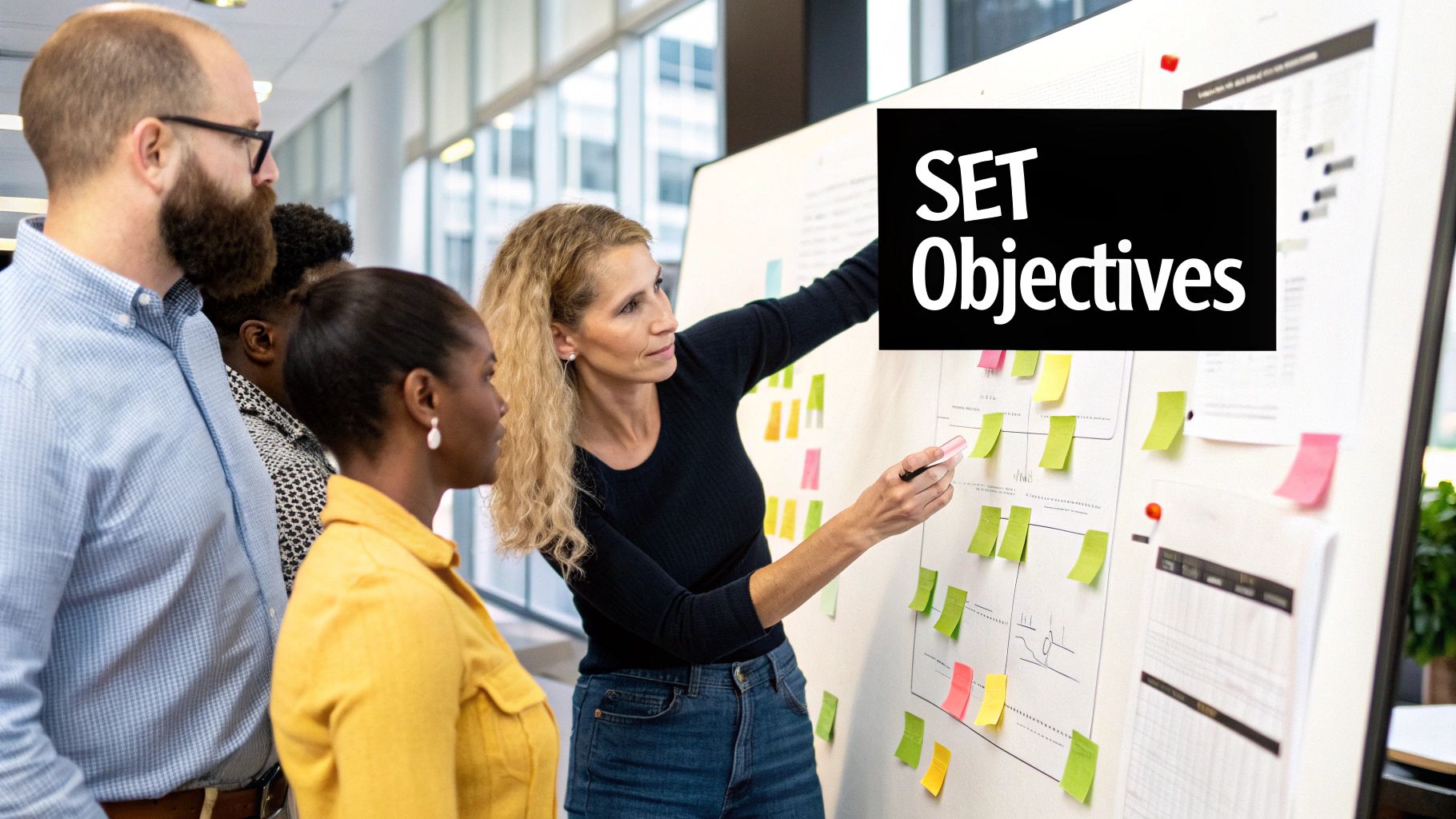
This strategic approach is exemplified by major industry events. Salesforce’s Trailhead DX conferences are laser-focused on a single KPI: increasing the number of certified developers on their platform. Similarly, Microsoft’s annual Build conference aims to boost developer engagement and accelerate the adoption of its new tools and technologies. This level of focus ensures every element serves a strategic purpose.
Actionable Tips for Implementation
To set effective goals, you need a structured process. This ensures alignment across all teams and provides a clear benchmark for measuring success post-event.
- Involve Key Stakeholders: Host a kickoff meeting with department heads and executive leadership to gather input and ensure company-wide buy-in from the start.
- Establish Measurable KPIs: Go beyond vague goals like "brand awareness." Instead, set specific, measurable, achievable, relevant, and time-bound (SMART) goals. For example, aim for a "20% increase in qualified sales leads" or "achieve a 90% attendee satisfaction score."
- Document and Approve: Create a formal event brief that outlines all primary and secondary objectives. Have this document signed off by key stakeholders to serve as your guiding star throughout the planning process.
2. Budget Planning and Financial Management
Once objectives are set, the next critical step in any corporate event planning checklist is establishing a comprehensive budget. This isn't just about a total number; it's about detailed financial management that accounts for every potential expense and revenue source. Effective budgeting ensures your event is not only impactful but also financially viable, preventing costly overruns and enabling smart resource allocation. A well-managed budget is the financial backbone that supports every other planning decision.
This disciplined financial approach is standard for major corporate events. Adobe MAX, for instance, uses a flexible budget model that allows for high-impact, last-minute additions like sought-after speakers, while Oracle OpenWorld manages budgets exceeding $50 million with a sophisticated tracking system. This level of financial control is essential for executing large-scale events without compromising on quality or exceeding financial limits.
This process flow diagram illustrates the essential stages of effective event financial management, from initial creation to ongoing control.
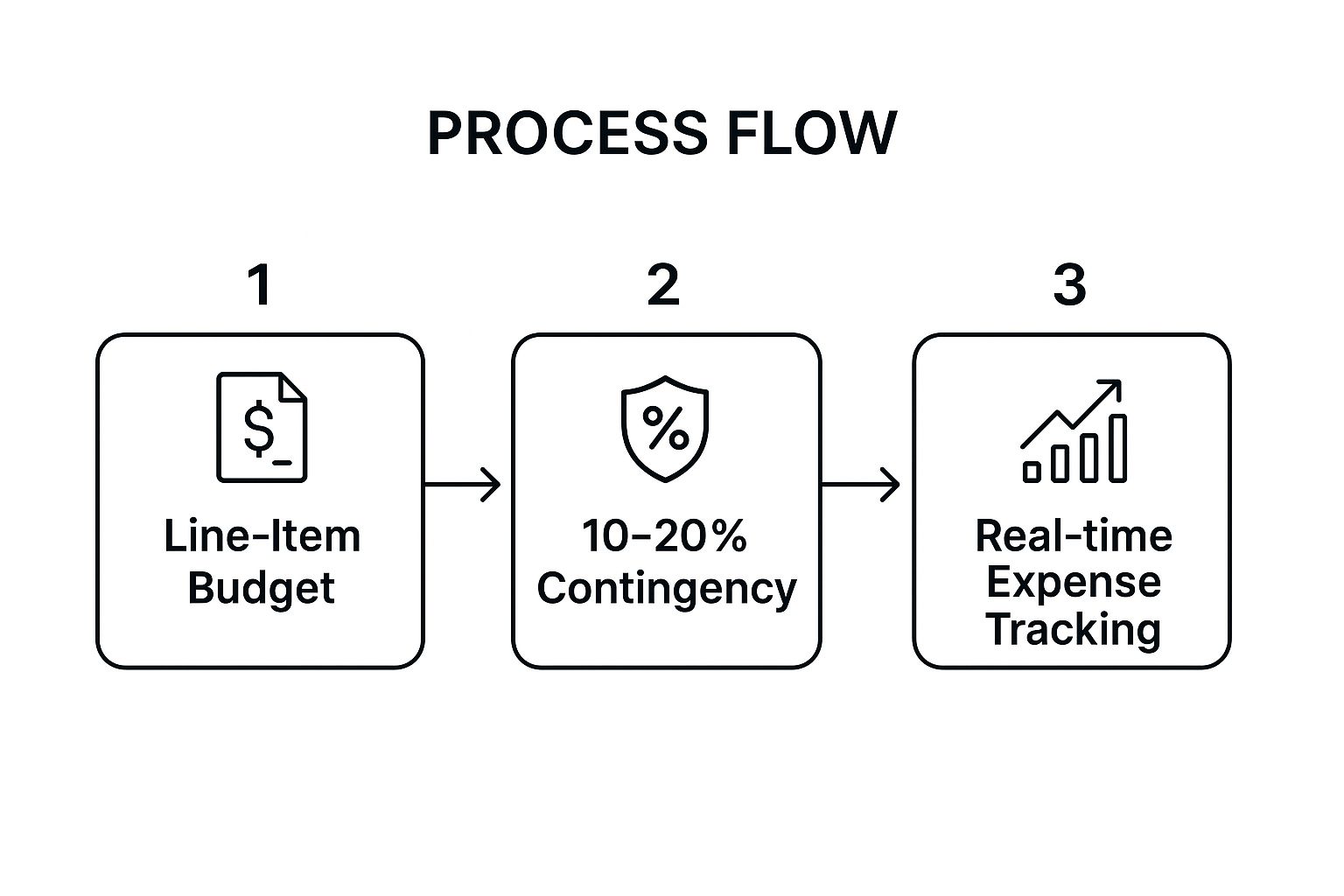
Following this sequence ensures you build a realistic budget, protect it with a safety net, and maintain control through active monitoring.
Actionable Tips for Implementation
To maintain fiscal responsibility, a structured and transparent financial process is non-negotiable. This prevents unexpected expenses and ensures every dollar is accounted for, aligning spending with your strategic goals.
- Create a Detailed Line-Item Budget: Break down all potential costs, including venue, catering, A/V technology, marketing, staffing, and speaker fees. Get quotes from at least three vendors for major expenses to ensure competitive pricing.
- Allocate a Contingency Fund: Set aside 10-20% of your total budget for unforeseen costs. This buffer is crucial for managing unexpected issues without derailing your entire financial plan.
- Implement Weekly Tracking: Use event management software with integrated budgeting tools, like those offered by Cvent, to track actual spending against your budget in real time. This allows for quick adjustments and prevents small overages from snowballing.
- Negotiate Favorable Payment Terms: Work with vendors to establish payment schedules that align with your company’s cash flow. Avoid large upfront deposits where possible to maintain financial flexibility throughout the planning process.
3. Venue Selection and Logistics Coordination
Once your objectives and budget are set, the next critical step in your corporate event planning checklist is securing the right venue. This decision profoundly impacts attendee experience, logistical feasibility, and overall event success. The ideal venue isn't just a space; it's a strategic partner that aligns with your event’s goals, brand image, and technical requirements. It encompasses everything from location and capacity to technological infrastructure and ambiance.
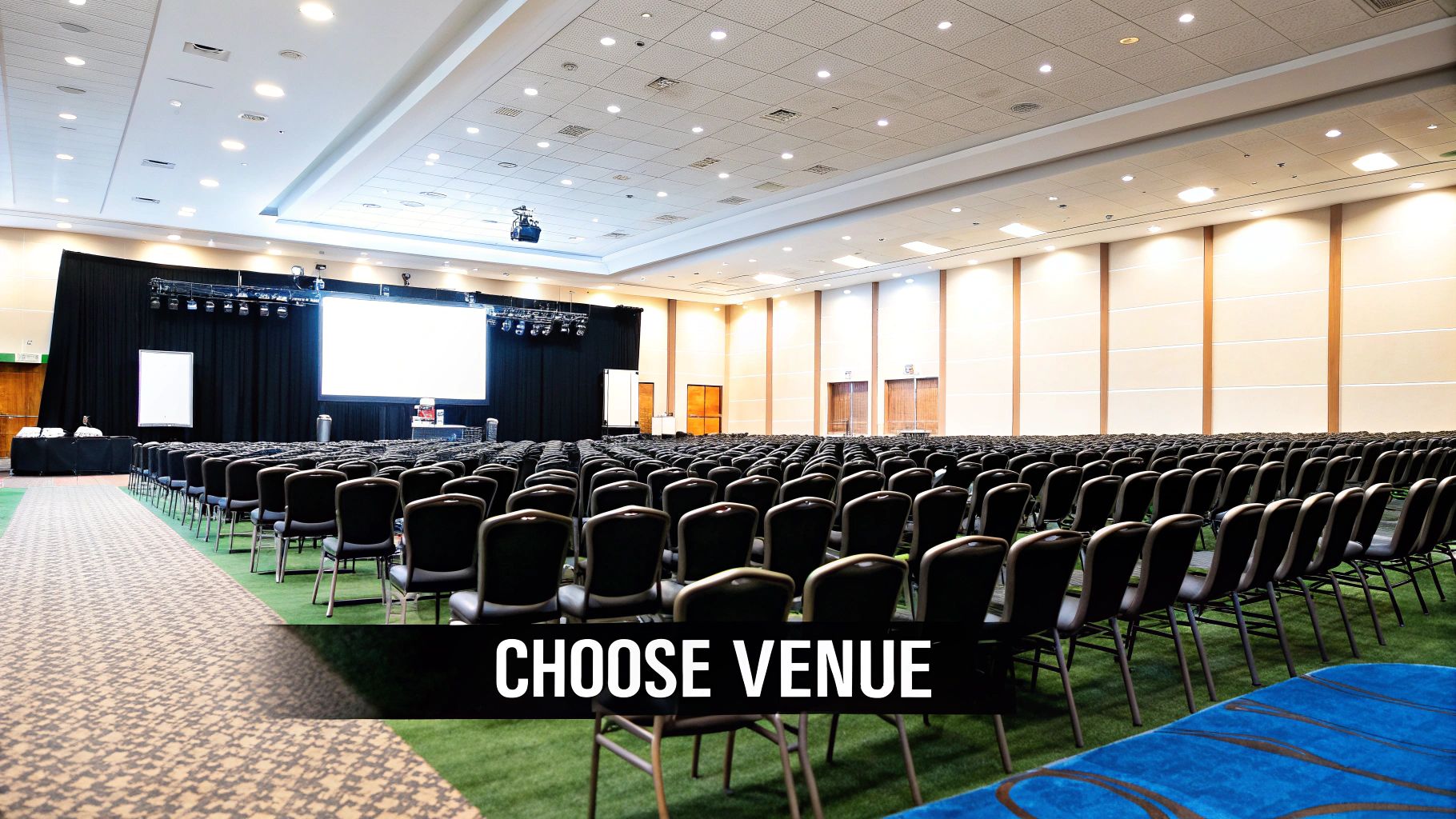
Consider how major brands leverage venue choice. Apple strategically uses the Steve Jobs Theater for its iconic product launches, a venue designed to create an atmosphere of innovation and exclusivity. Similarly, Salesforce's long-standing use of San Francisco's Moscone Center for Dreamforce transforms an entire district into a unified, branded tech campus. This shows how a venue can become an integral part of the event's identity and message.
Actionable Tips for Implementation
Finding and managing the perfect venue requires a methodical approach. Careful evaluation and proactive coordination are necessary to prevent logistical issues and ensure a seamless experience for everyone involved.
- Visit Venues In Person: If possible, visit your top choices during an event similar in scale to your own. This provides invaluable insight into traffic flow, acoustics, and the venue's operational capabilities under pressure.
- Negotiate Key Contract Clauses: Pay close attention to cancellation policies and force majeure provisions. A flexible contract can protect your investment against unforeseen circumstances.
- Verify Insurance and Compliance: Confirm the venue’s liability coverage and ensure it meets your company's requirements. Also, verify that the space is fully compliant with accessibility standards like the Americans with Disabilities Act (ADA).
- Develop Detailed Logistical Plans: Create detailed floor plans, seating arrangements, and a comprehensive schedule for vendor load-in and load-out. Share this with venue management early to coordinate efforts and avoid last-minute conflicts.
4. Speaker and Entertainment Procurement
The speakers and entertainment you select are the lifeblood of your event's content, directly influencing attendee engagement and the overall perceived value. This step involves strategically identifying, vetting, and securing keynote speakers, industry experts, or entertainers who align perfectly with your event's objectives and resonate with your audience. This process extends beyond just booking a name; it includes managing contracts, travel, technical riders, and content to ensure a seamless and impactful delivery.
Events like TED have perfected this, with a rigorous curation methodology that ensures every talk is powerful and thought-provoking. Similarly, the World Economic Forum at Davos secures an exclusive lineup of global leaders, making attendance a must for its target audience. This strategic procurement transforms an event from a simple gathering into a can't-miss experience, a key part of any comprehensive corporate event planning checklist.
Actionable Tips for Implementation
A structured approach to sourcing talent prevents last-minute scrambles and ensures the content delivered meets your high standards. This creates a more professional experience for both the talent and your attendees.
- Book Well in Advance: For high-profile speakers or in-demand entertainers, begin your outreach 6-12 months before the event date to secure their availability and negotiate favorable terms.
- Conduct Pre-Event Alignment Calls: Schedule calls with all speakers to discuss your event's theme, audience demographics, and specific content expectations. This ensures their presentation is tailored and relevant, not a generic canned speech.
- Create Detailed Logistical Plans: Develop a thorough plan covering everything from travel arrangements and hotel accommodations to backstage requirements, green room amenities, and on-stage technical needs. A well-cared-for speaker is a happy and effective speaker.
5. Attendee Registration and Communication Management
A seamless registration process is the first direct touchpoint you have with your attendees, setting the tone for their entire event experience. This step in your corporate event planning checklist involves more than just collecting names; it's about creating a comprehensive system for managing attendee data, communication, and engagement from initial sign-up to post-event follow-up. A robust management system ensures a smooth, professional journey for every participant.
Major events master this process to handle massive scale. HubSpot's INBOUND conference uses progressive profiling during registration to gather deeper insights and enhance attendee targeting. Similarly, Adobe Summit empowers its massive audience with a personalized agenda builder, allowing each attendee to curate their unique event journey directly from the registration data they provided. These examples show how registration can be a strategic tool for personalization.
Actionable Tips for Implementation
To build an effective registration and communication workflow, focus on clarity, efficiency, and personalization. This system should not only be easy for attendees to use but also provide valuable data for your team. For a comprehensive overview of managing attendee entry, refer to this ultimate guide to visitor registration.
- Test the Process Rigorously: Before going live, conduct thorough end-to-end testing of the registration forms, payment gateways, and confirmation emails to identify and fix any potential friction points.
- Create Tiered Offerings: Develop multiple registration tiers (e.g., Early Bird, VIP, General Admission) with clear value propositions for each. This segmentation can boost early sign-ups and cater to different attendee needs.
- Automate Key Communications: Set up automated email sequences for registration confirmations, event reminders, and need-to-know updates. Ensure all communications include clear details, like your cancellation and refund policy, to minimize confusion.
6. Technology Infrastructure and AV Production
The technical backbone of your event is what ensures a seamless, professional experience for every attendee, whether they are in the room or joining virtually. This step in your corporate event planning checklist covers all audio-visual (AV) production, live streaming capabilities, interactive technology, and reliable connectivity. Getting this right prevents technical glitches that can derail presentations, frustrate attendees, and undermine your event's credibility.
World-class events demonstrate the power of flawless tech execution. Consider Apple's product launches, where massive, crystal-clear LED walls and perfectly timed camera work create a cinematic feel. Similarly, virtual events like VMware Explore rely on broadcast-quality production across multiple digital stages to keep a global audience engaged. These examples show that investing in robust technology isn’t a luxury; it’s essential for delivering a high-impact message.
Actionable Tips for Implementation
To build a reliable technical foundation, you must plan meticulously and partner with experienced professionals. This proactive approach mitigates risk and ensures a smooth production.
- Conduct Full Technical Rehearsals: Schedule a complete run-through with all speakers, presenters, and AV crew 24 to 48 hours before the event. This identifies potential issues with microphones, slides, lighting cues, and video playback while there is still time to fix them.
- Plan for Peak Connectivity: A common failure point is inadequate Wi-Fi. Plan for a high-density network that can support at least two to three devices per attendee. For large gatherings, consider partnerships focused on providing WiFi access for large-scale events to ensure seamless connectivity for all attendees.
- Create a Technical Run-of-Show: Develop a detailed script for your AV team that outlines every cue, from a presenter walking on stage to a specific video roll-in. This document is the master guide for the production crew and eliminates guesswork on event day.
- Insist on Redundancy: Work with your AV vendor to have backup systems for all critical components, including projectors, microphones, laptops, and internet connections. A single point of failure should not bring your entire event to a halt.
7. Catering and Hospitality Services
Beyond mere sustenance, catering and hospitality are critical components of the attendee experience, directly impacting satisfaction, networking, and overall event perception. This element of your corporate event planning checklist involves the meticulous planning of all food and beverage services, from menu selection to service style. Thoughtful catering can reinforce your event's theme, accommodate guest needs, and create memorable moments that facilitate connection and engagement.
Major corporations leverage food as a strategic tool. Google I/O, for instance, features globally-inspired food stations that celebrate the diversity of its developer community. Similarly, Salesforce champions its corporate values by focusing on sustainable, locally-sourced catering options, turning a meal break into a statement of brand identity. These examples show how catering can transcend logistics to become an integral part of the event narrative.
Actionable Tips for Implementation
To elevate your catering from a simple meal service to a strategic hospitality experience, focus on detailed planning and execution that anticipates attendee needs and aligns with event goals.
- Survey Dietary Needs Early: Integrate questions about dietary restrictions, allergies, and preferences directly into your registration form. This proactive step prevents last-minute scrambles and demonstrates care for your attendees' well-being.
- Plan for Contingencies: A standard industry practice is to plan for 10-15% more food than your final RSVP count. This buffer accommodates unexpected guests or heartier appetites, ensuring no one goes hungry.
- Schedule Breaks Strategically: Time your coffee breaks and meal times to combat attendee fatigue and maintain high energy levels. A well-timed refreshment can be crucial for keeping your audience engaged during long sessions.
- Encourage Networking with Food: Move beyond traditional buffets. Consider interactive food stations, such as build-your-own taco bars or dessert decorating tables, to create natural conversation starters and encourage mingling among guests.
- Prioritize Clear Labeling: Ensure all food items, especially at buffets and stations, are clearly labeled. Specifically mark common dietary categories like vegetarian, vegan, and gluten-free to make dining seamless and safe for all attendees.
8. Marketing and Promotional Campaign Development
Once your event's framework is in place, the next critical step in your corporate event planning checklist is creating a strategic marketing plan. This involves more than just sending a few emails; it's about building a multi-channel promotional campaign designed to generate buzz, drive registrations, and maximize attendance. A strong marketing push ensures that your target audience is not only aware of your event but also excited to participate.
This comprehensive approach is mastered by major players. HubSpot’s INBOUND conference, for example, utilizes a year-round content strategy that keeps its audience engaged long before and after the event. Similarly, Adobe MAX leverages powerful influencer partnerships with top creative professionals, turning them into authentic brand ambassadors. These campaigns successfully build a community around the event, making it a must-attend affair.
Actionable Tips for Implementation
To effectively promote your event, you need a coordinated and sustained effort across various platforms. This ensures your message reaches the right people at the right time.
- Start Early and Be Consistent: Begin your marketing campaigns at least 3-6 months before a major event. Use a consistent event hashtag across all platforms like email, social media, and your website to unify communications.
- Leverage Partners and Speakers: Create shareable content such as branded graphics, pre-written social posts, and video snippets. Encourage speakers, sponsors, and employees to amplify your message through their own networks.
- Track and Optimize: Use tracking links (UTM codes) to monitor which channels are driving the most registrations. Analyze this data to optimize your marketing spend and focus your efforts on the most effective tactics for a better ROI.
9. Risk Management and Contingency Planning
A crucial component of any comprehensive corporate event planning checklist is creating a robust risk management and contingency plan. This involves proactively identifying, assessing, and mitigating potential disruptions that could jeopardize your event's success. From technical failures and speaker cancellations to severe weather or health emergencies, a well-defined plan ensures you can respond swiftly and effectively, minimizing negative impact on attendees and stakeholders.
This proactive approach is essential for maintaining business continuity. For instance, many large-scale outdoor corporate retreats secure indoor backup venues or install high-quality tents to mitigate weather risks. Similarly, high-profile financial services conferences often implement enhanced security protocols, including bag checks and credential verification, to address potential threats. These measures protect the event's integrity and demonstrate a high level of professionalism and care for attendee safety.
Actionable Tips for Implementation
Developing a solid contingency plan requires systematic thinking and collaboration across your event team. A structured approach ensures all potential vulnerabilities are considered and addressed.
- Conduct a Formal Risk Assessment: Organize a workshop with key stakeholders to brainstorm all possible risks. Categorize them by likelihood and potential impact to prioritize your mitigation efforts.
- Negotiate Protective Vendor Contracts: Ensure all major vendor agreements include a clear force majeure clause. This contractual provision can protect you from liability for unforeseeable circumstances that make fulfilling the contract impossible.
- Establish a Communication Plan: Create and distribute an emergency contact list and a clear communication tree. This ensures information flows quickly and accurately to the right people during a crisis.
- Develop Backup Plans for Critical Elements: Prepare for the unexpected by having backup speakers, alternative venues, and redundant technology solutions ready to deploy at a moment's notice.
10. Post-Event Analysis and Follow-Up Strategy
The value of a corporate event extends far beyond the final closing remarks. A systematic post-event analysis and follow-up strategy is a critical part of any corporate event planning checklist, transforming a one-time gathering into a long-term asset. This process involves measuring performance against the initial objectives, gathering comprehensive feedback, and executing a plan to nurture relationships and capitalize on opportunities generated during the event. Without it, you are leaving significant potential ROI on the table.

Industry leaders demonstrate the power of this final step. Salesforce conducts a comprehensive post-Dreamforce analysis to track pipeline generation and sales attribution. Similarly, Adobe Summit excels at repurposing its event content, creating on-demand sessions, blog posts, and social media highlights that extend the event’s value and thought leadership impact for months. This strategic follow-through is what separates a good event from a great one.
Actionable Tips for Implementation
To maximize your event's long-term value, you need a structured and timely approach to analysis and follow-up. This ensures that momentum is not lost and that key learnings inform future strategies.
- Deploy Surveys Immediately: Send out feedback surveys via platforms like SurveyMonkey or Qualtrics within 24-48 hours. This timeframe is crucial for capturing fresh, accurate impressions from attendees, sponsors, and speakers while the event is still top of mind.
- Schedule a Stakeholder Debrief: Host a formal post-mortem meeting within one week of the event. Include key internal teams, executives, and essential vendors to discuss what worked, what didn’t, and review performance against the established KPIs.
- Implement a Lead Nurturing Workflow: Segment new contacts and leads gathered at the event and enter them into a pre-planned follow-up sequence using your CRM. Tailor communication based on their interests and interactions to effectively guide them through the sales funnel.
Corporate Event Planning: 10-Point Checklist Comparison
| Item | Implementation Complexity 🔄 | Resource Requirements ⚡ | Expected Outcomes 📊 | Ideal Use Cases 💡 | Key Advantages ⭐ |
|---|---|---|---|---|---|
| Define Event Objectives and Goals | Moderate: requires stakeholder alignment | Low to Moderate | Clear direction, measurable KPIs, focused planning | All corporate events needing clear targets | Provides direction, accountability, effective budget use |
| Budget Planning and Financial Management | High: detailed tracking and approvals | High | Prevent cost overruns, financial transparency | Large-scale events with significant budgets | Controls costs, enables informed financial decisions |
| Venue Selection and Logistics Coordination | Moderate to High: site visits and contracts | Moderate to High | Optimal venue fit, enhanced attendee experience | Events prioritizing attendee engagement and logistics | Sets event tone, impacts satisfaction and cost savings |
| Speaker and Entertainment Procurement | Moderate: talent scouting and contract mgmt | Moderate | Engaging content, strong brand credibility | Events requiring keynote presentations, entertainment | Drives attendance, networking, and media coverage |
| Attendee Registration and Communication Management | Moderate to High: tech setup and personalization | Moderate to High | Streamlined registration, targeted engagement | Events with large attendee numbers needing automation | Improves attendee experience, data insights, reduces manual work |
| Technology Infrastructure and AV Production | High: complex setups and production | High | Enhanced engagement, hybrid participation | Tech-heavy, hybrid, or virtual events | Professional quality, audience interaction, content repurposing |
| Catering and Hospitality Services | Moderate: menu planning and service logistics | Moderate | Attendee satisfaction, networking enhancement | Events with social/dining components | Boosts networking, supports cultural needs, attendee retention |
| Marketing and Promotional Campaign Development | High: multi-channel and ongoing campaigns | High | Increased attendance, brand awareness | Events requiring strong audience growth | Drives ROI, builds buzz, measurable impact |
| Risk Management and Contingency Planning | Moderate: ongoing monitoring and plans | Moderate | Mitigates losses, ensures safety | Events vulnerable to external disruptions | Protects finances, safety, reputation, stakeholder confidence |
| Post-Event Analysis and Follow-Up Strategy | Moderate: data collection and reporting | Moderate | Data-driven improvements, ROI validation | All events seeking performance optimization | Provides insights, maximizes long-term value |
Orchestrating Success: Bringing Your Event Vision to Life
Mastering the art of corporate event planning is an ongoing process of refinement, learning, and adaptation. Moving from initial concept to a flawless live experience requires more than just good intentions; it demands a structured, meticulous approach. This comprehensive corporate event planning checklist provides the strategic scaffolding needed to build memorable and impactful events time and time again.
By systematically addressing each of the ten core pillars outlined in this guide, you create a resilient framework. This framework is designed to handle the inevitable complexities and surprises that arise during event execution. From defining clear objectives and establishing sound financial management to conducting robust post-event analysis, each step is a critical building block toward your end goal.
From Checklist to Career-Defining Events
The true value of this checklist emerges when you move beyond simply ticking boxes. Instead, view it as a dynamic tool that empowers your team, instills confidence in your stakeholders, and ensures you consistently deliver events that achieve more than just a smooth run. The goal is to produce events that drive tangible business results, whether that’s lead generation, brand loyalty, or improved employee morale.
Success truly lies in the details that this framework helps you manage:
- Seamless Logistics: Coordinating every element, from speaker travel to attendee transportation, ensures a frictionless experience for all participants.
- Flawless Technology: A well-rehearsed audio-visual setup and stable technology infrastructure are non-negotiable for a professional impression.
- Thoughtful Hospitality: Details like anticipating dietary needs or providing comfortable networking spaces show a level of care that resonates deeply with guests.
The Strategic Advantage of Meticulous Planning
Ultimately, a detailed corporate event planning checklist is your greatest strategic advantage. It transforms the overwhelming task of event management into a series of manageable, actionable steps. This methodical approach frees up your mental bandwidth, allowing you to focus on creative problem-solving and enhancing the attendee experience rather than putting out fires.
Remember that each successful event builds on the last. The data gathered from your post-event analysis becomes the foundation for the objectives of your next one. The relationships you build with vendors, like reliable transportation providers or caterers, become trusted partnerships. This cycle of planning, execution, and analysis is what separates good event planners from great ones. Use this guide to elevate your process, mitigate risks, and orchestrate experiences that not only meet expectations but profoundly exceed them.
For your next corporate event in San Diego, ensure your VIPs, speakers, and executives experience seamless, professional travel from the moment they land. Partner with Pompeii Limousine for reliable airport transportation, private car services, and luxury chauffeur solutions that reflect the high standards of your event. Book your premium transportation with Pompeii Limousine and let us handle the logistics, so you can focus on creating an unforgettable experience.